

Print on Demand has been declared “dead” many times, especially in discussions around print on demand. Rising ad costs, oversaturated marketplaces, thinner margins, slower fulfilment, and higher customer expectations have made many sellers question whether this business model still works.
If you’re running—or planning to start—a print on demand business in 2026, you’ve likely already felt this pressure. What worked in 2020 or even 2023 no longer guarantees success today.
So the real question isn’t “Is Print on Demand dead?”
It’s “Is print on demand worth it in 2026 —and if yes, for whom?”
The truth is simple:
Print on demand has not disappeared. It has evolved.
In 2026, print on demand profitable models look very different from side hustles selling generic t-shirts and mugs. Today’s successful businesses are automated, workflow-driven systems serving families, schools, photographers, creators, brands, and institutions that need personalisation at scale.
This article is a reality check—not hype.
Let’s break down what’s really happening with print on demand 2026, what still works, what doesn’t, and how smart POD sellers are scaling today.
Why Print on Demand Feels Harder Than Ever in (2026)
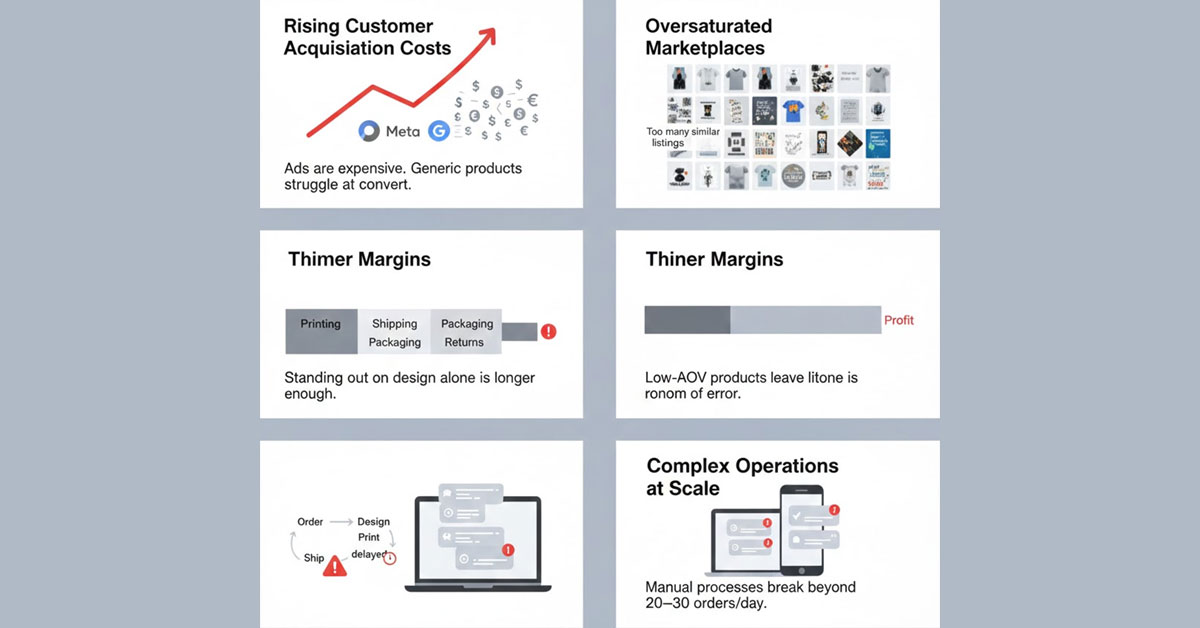
If print on demand feels more difficult than before, it’s not your imagination.
Rising Customer Acquisition Costs
Paid advertising on Meta and Google has become significantly more expensive . Generic POD products struggle to convert unless heavily discounted, making print on demand profitable harder for sellers relying purely on ads.
Oversaturated Marketplaces
Platforms like Amazon, Etsy, and Shopify are flooded with similar listings. In categories like print on demand t shirt , differentiation based on design alone is no longer enough.
Margin Pressure
Printing, shipping, COD fees, packaging, and returns quickly eat into margins—especially for low-AOV products common in POD dropshipping setups.
Operational Complexity
Customers expect fast delivery, consistent quality, and real-time updates. Manual order handling that once worked at 10–20 orders a day becomes unsustainable at scale.
In print on demand business 2026, inefficiency directly impacts profitability.
What the Data and Market Trends Say About Print on Demand 2026
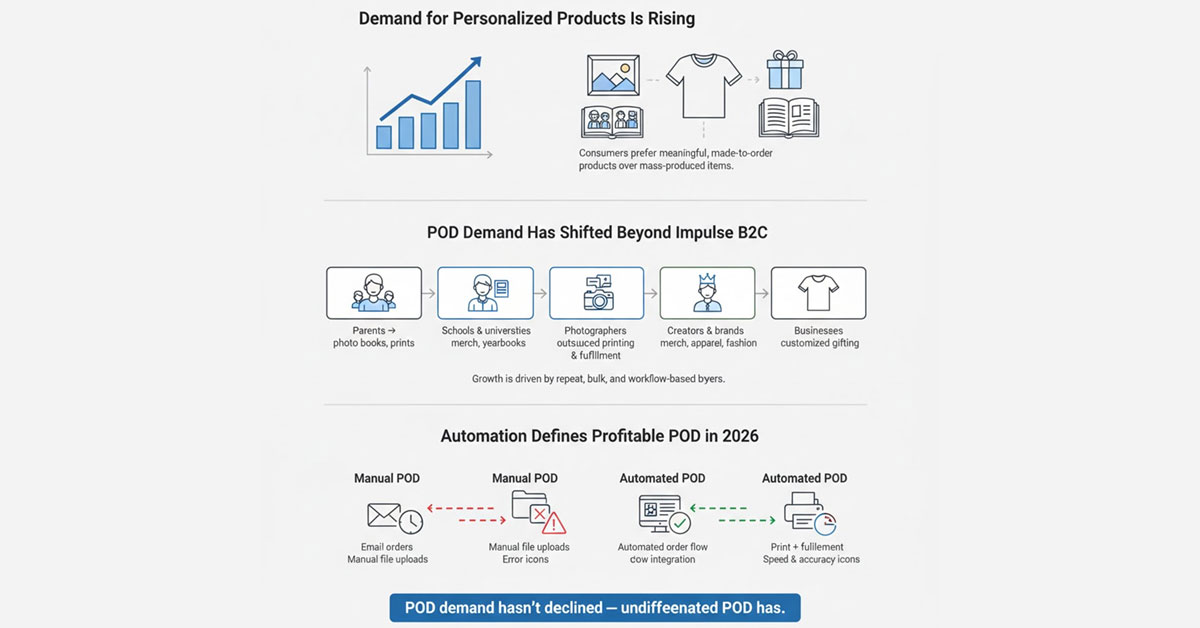
Despite the noise, print on demand in 2026 is still growing—driven by demand for personalised and made-to-order products.
High-growth categories include:
- Family photo printing products
- Art and wall décor
- School and education-led merchandise
- Custom apparel and fashion
- Corporate and institutional gifting
Consumers increasingly value products that feel personal, emotional, and meaningful rather than mass-produced.
Another major shift is demand source. Print on demand is no longer limited to impulse B2C purchases. Growth now comes from:
- Parents ordering photo books and memory products
- Schools and universities selling yearbooks and merchandise
- Photographers outsourcing print fulfilment
- Creators and
brands launching merch - Businesses ordering customised gifting products
At the same time, automation has become non-negotiable. Sellers using web-to-print systems outperform those relying on manual processes.
Key insight:
Demand hasn’t declined—undifferentiated print on demand has.
What “Print on Demand” Really Means in 2026
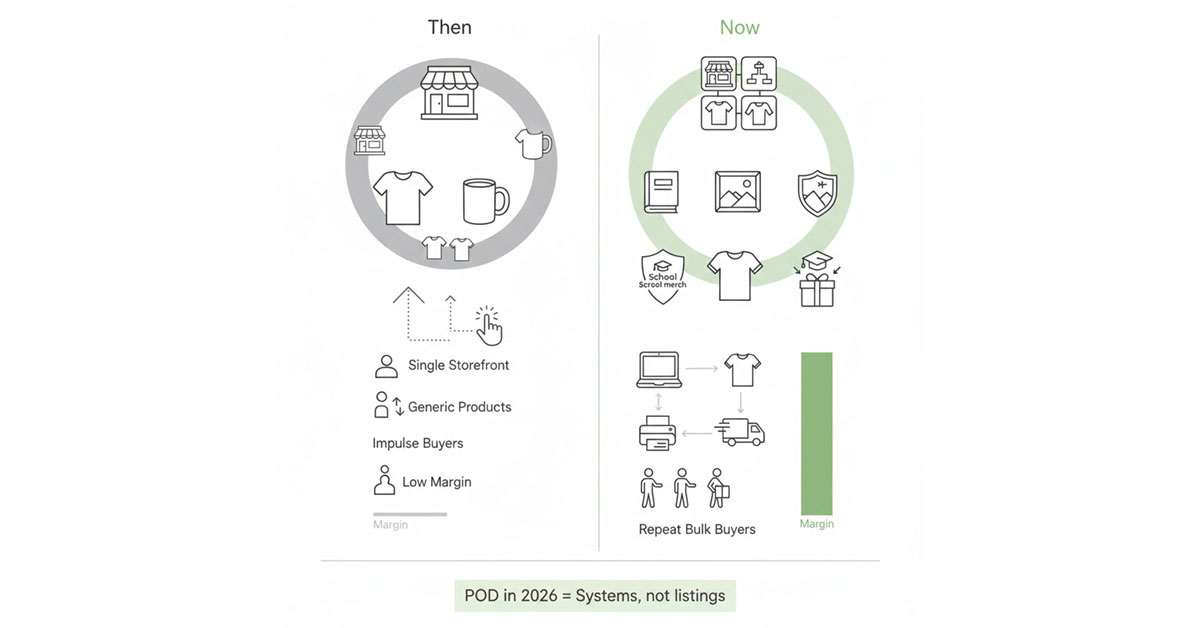
Earlier, print on demand in involved:
- Listing products
- Uploading designs manually
- Waiting for orders
- Sending files to print partners
In 2026, print on demand looks very different.
| Old POD Model | Modern POD Model |
| Generic products | Personalised & niche products |
| Manual uploads | Automated workflows |
| One store | Multiple storefronts |
| One-time buyers | Repeat & bulk buyers |
| Low margins | Higher AOV |
Modern print on demand is not about selling more SKUs—it’s about building repeatable systems that serve defined customer groups efficiently.
Is Print on Demand Profitable in 2026?
If people keep asking “Is print on demand profitable?”, the answer is yes—but only when built correctly.
Profitable print on demand 2026 businesses:
- Serve a clearly defined niche
- Sell products tied to events, identity, or emotion
- Focus on repeat demand instead of impulse buying
- Control workflows instead of relying on manual effort
For example, sellers offering family photo books, school yearbooks, or event prints enjoy predictable demand. Compare this with generic print-on-demand t-shirt stores competing purely on price—the difference in margins and stability is clear.
Simply put, print on demand works when treated like a real business, not a passive income experiment.
How Print on Demand Businesses Scale in (2026)
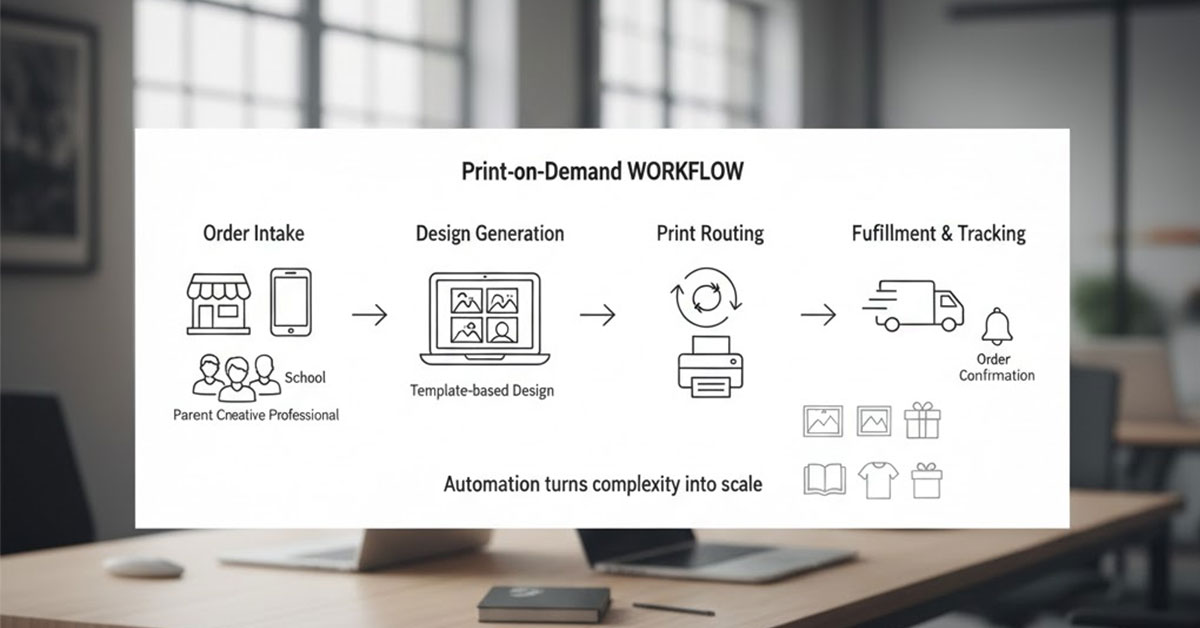
Automation Is the Foundation
Scaling print on demand without automation is nearly impossible in 2026.
Automation connects:
- Order intake
- Design generation
- Print routing
- Fulfilment and tracking
Web-to-Print Changes the Economics

Web-to-print tools allow customers to personalise products directly with live previews.
This is essential for:
- Family photo printing
- Art and wall décor
- School merchandise
- Apparel and fashion
It reduces errors, increases buyer confidence, and improves margins across print on demand suppliers
Multiple Storefront Strategy
Instead of one generic store, successful sellers now run:
- Family photo storefronts
- School and education stores
- Photographer client portals
- Merch and apparel brand stores
This approach works best when combined with the best print on demand platforms offers.
Benefits of Print on Demand When Done Right
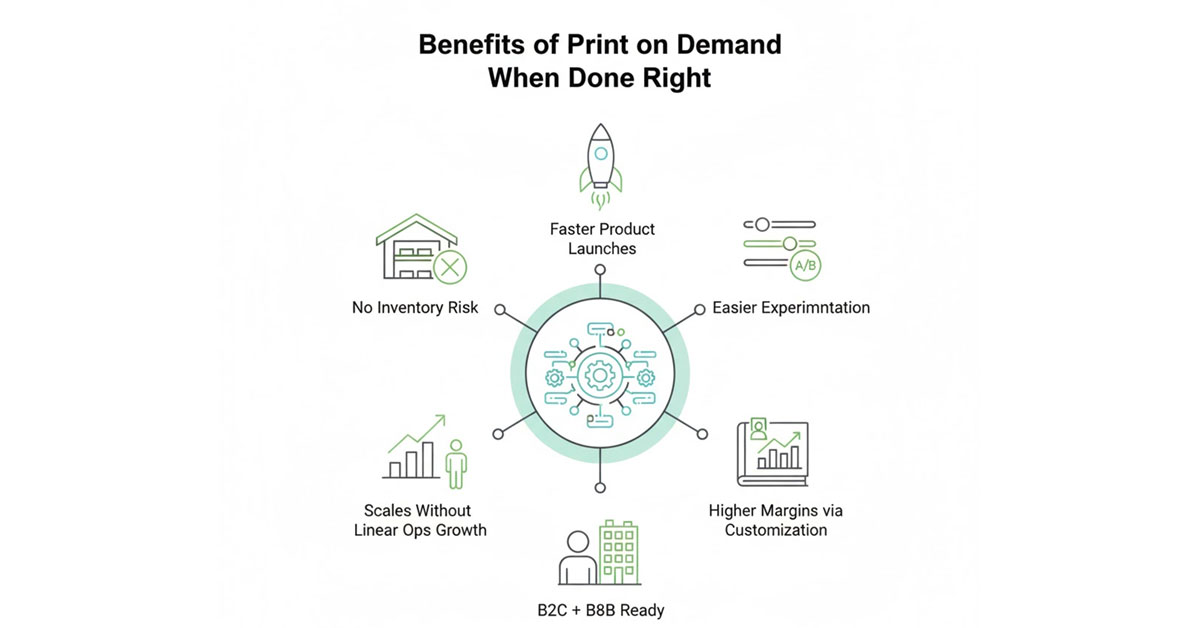
When structured properly, print on demand still offers strong advantages:
- No inventory risk
- Faster product launches
- Easier experimentation
- Higher margins through customisation
- Works for both B2C and B2B
- Scales without linear operational growth
No inventory doesn’t mean no planning—systems matter more than ever.
Real Use Cases Where Print on Demand Works (2026)
- Family Photo Printing Products – Emotion-driven purchases
- Art & Wall Décor – Personalised home décor
- Schools & Universities – Yearbooks, certificates, merchandise
- Photographers & Studios – Albums, prints, frames
- Merch, Apparel & Fashion Brands – Creator merch and limited drops
- Events & Seasonal Campaigns – Time-bound demand with zero inventory
Common Mistakes That Make Print on Demand Unprofitable
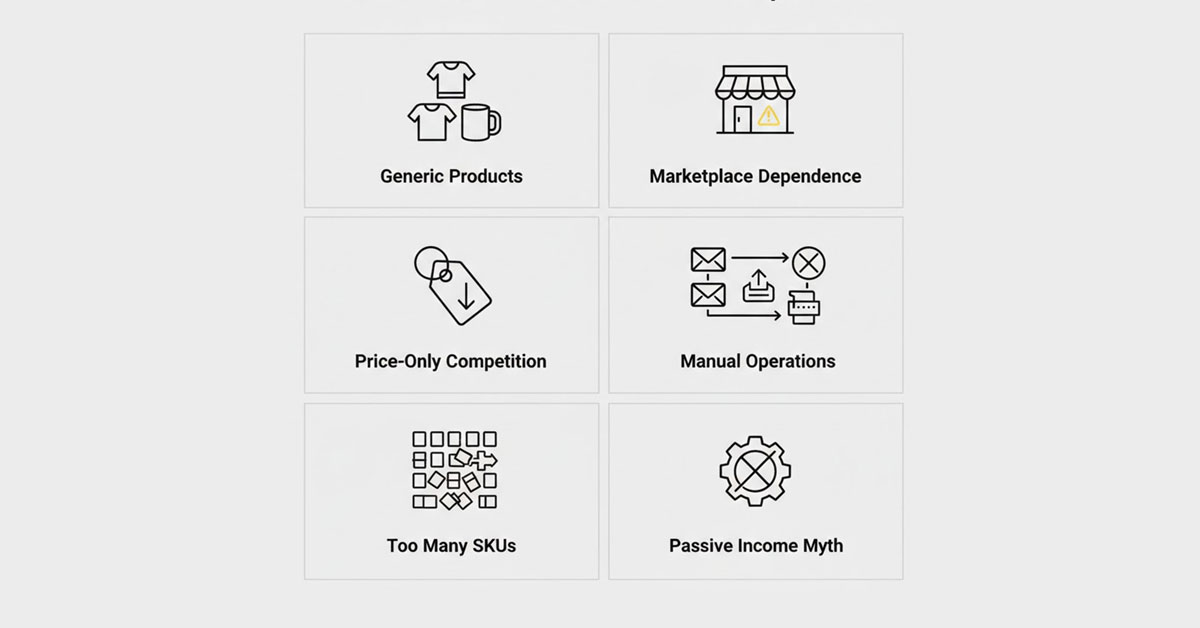
Most failures in print on demand come from avoidable mistakes:
- Selling generic products
- Competing only on price
- Offering too many SKUs
- Relying entirely on marketplaces
- Running operations manually
- Treating POD as passive income
In print on demand business 2026, inefficiency is the biggest hidden cost.
So, Is Print on Demand Worth It in 2026 ?
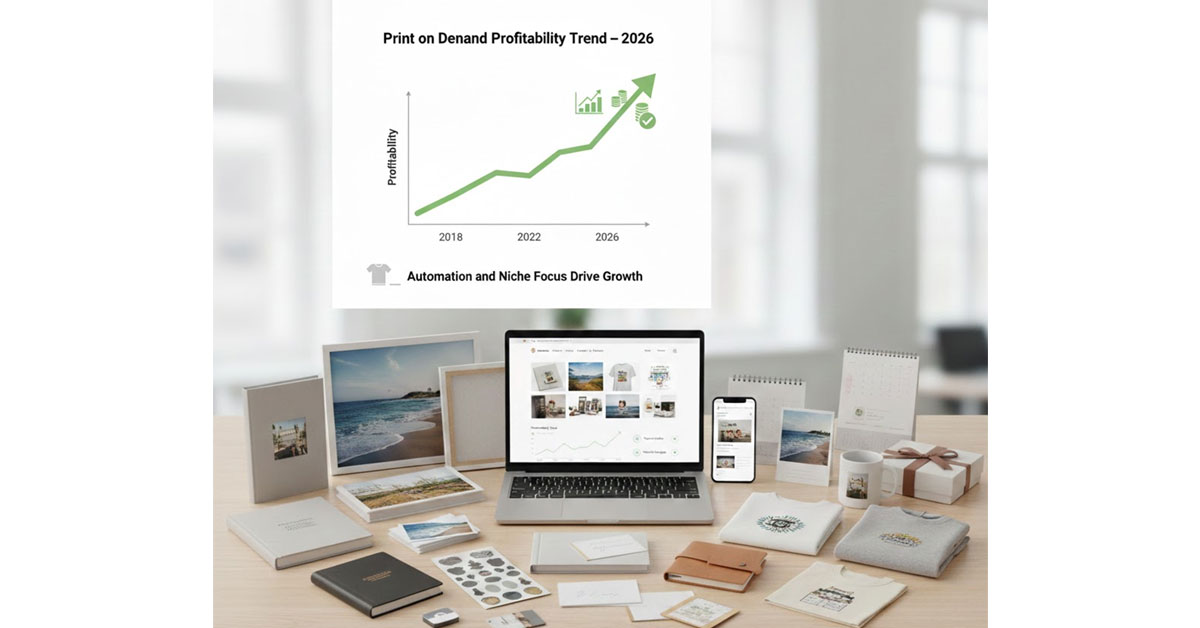
Yes—but not the old way.
Print on demand in 2026 rewards sellers who think in terms of systems, workflows, and repeatable customer demand—whether from families, schools, photographers, or brands.
The real question isn’t whether POD works.
It’s whether you’re willing to build print on demand the right way.
If your goal is to scale personalised products across photo printing, art and décor, merch, apparel, and fashion, print on demand remains one of the most flexible and powerful business models in 2026
FAQs: Is Print on Demand Worth It in 2026?
Q: Is print on demand worth it in 2026?
A: Print on demand is worth it in 2026 for businesses that focus on personalized products, automation, and repeat demand rather than generic listings.
Q: Is print on demand profitable in 2026?
A: Print on demand can be profitable in 2026 when sellers use web-to-print, automated workflows, and serve defined customer segments.
Q: Why does print on demand fail for many sellers today?
A: Print on demand fails when sellers rely on generic products, manual processes, price competition, and marketplace dependency.
Q: What types of POD businesses succeed in 2026?
A: Successful POD businesses serve families, schools, photographers, brands, and institutions with customized, repeat-driven products.
Q: Is automation necessary for print on demand in 2026?
A: Yes. Automation is essential to reduce errors, control costs, and scale POD operations efficiently in 2026.