
Is print on demand profitable in India? Yes, but real profitability depends on more than just starting with low investment. In 2026, printers, ecommerce sellers, and new entrepreneurs need stronger systems, better pricing, and a smoother customer experience to build a sustainable POD business.
As printing services India 2026 continue to grow, print on demand is becoming a strong opportunity across photobooks, yearbooks, personalized merchandise, gifts, and branded products. The business model reduces inventory risk, but success depends on how well operations, margins, and product strategy are managed.
As printing services in India 2026 become a key player in the global market, many wonder: Is print-on-demand profitable in India in 2026? This guide delves into what drives profitability, the challenges POD businesses face, and what printers need to succeed.
This guide explains print on demand profit margins in India, the truth about print on demand business India low investment profitability, and what drives print on demand business India low investment success in a more competitive market.
Is Print on Demand Profitable in 2026?
Yes, Print on Demand remains profitable in 2026. The global printing services market in India is thriving, with significant growth expected. According to Grand View Research, the Print-on-Demand market was valued at $4.9 billion in 2021 and is anticipated to grow at a 26.1% CAGR from 2022 to 2030.
POD is not a passing trend but a sustainable business model with considerable growth potential. To succeed in the competitive printing services India 2026 market, you need to partner with reliable suppliers, offer premium products, and craft a well-executed marketing strategy.
Print on Demand Profit Margins India (What You Can Realistically Expect)
Many newcomers to printing services in India 2026 are eager to know the expected profit margins in POD. When people search for print on demand profit margins india, they usually want a simple number. In reality, margins vary based on product type, customization complexity, shipping, and your marketing cost.
Average Print on Demand Profit
For many POD products, profit margins often fall in the 10%–30% range, depending on:
- product pricing and positioning
- shipping and delivery costs
- production efficiency and wastage
- returns, replacements, and reprints
- marketing and platform fees
If your processes are manual and error rates are high, your margins drop quickly—even when sales look good.
Print on Demand Margins India Improve When You Sell Value, Not Just Price
To improve print on demand margins india, the most reliable lever is perceived value, not only reducing cost. Premium finishes, better packaging, strong previews, and niche-specific products allow higher pricing without killing conversion.
How to Calculate Profit Margin for a Print-on-Demand Business?
Understanding how to calculate the profit margin for a printing services business in India is essential for pricing products effectively. Here’s the formula:
Profit Margin Formula:
Profit Margin = [(Selling Price – Base Price) – Platform Fee] / Selling Price * 100
Example Calculation:
- Base Price (cost of manufacturing & shipping): ₹350
- Selling Price (price you charge the customer): ₹699
- Platform Fee (10% of the selling price): ₹69.9
Here’s the math:
Profit Margin = [(699 – 350) – 69.9 ] / 699 * 100 = 39.9%
This calculation shows a profit margin of 39.9% per product after accounting for production, shipping, and platform fees. Understanding how to calculate your margins is key to optimizing printing services in India 2026 for profitability.
Print-on-Demand Business in India: Low Investment, But Not “Free”
Print On Demand in India offers low upfront costs but isn’t “free.” While starting a printing services business in India 2026 is relatively low-cost compared to traditional printing, success still requires careful planning.
Typical low-cost setup for POD in India:
- storefront (website or marketplace)
- design creation (in-house or outsourced)
- product mockups / content
- marketing budget (even small to begin)
- customer support + returns handling
So yes—print on demand India low investment profitability is possible, but only when you plan costs upfront.
Print on Demand Business India Low Cost Setup Profitability (What Printers Must Build)
A print on demand business india low cost setup profitability strategy is not just about cheap machines or cheap suppliers. It’s about lowering the cost per order through systems.
The biggest cost killers in POD are:
- manual order handling
- design edits and back-and-forth approvals
- printing mistakes and reprints
- unclear customization inputs
- shipping issues and delayed updates
Printers who invest in workflow automation can scale volume without scaling headcount.
How Long Does It Take to Make Money with Print-on-Demand?
One of the questions new POD sellers often ask is, How long does it take to make money with print-on-demand? The answer varies, depending on how well you market your products and manage your costs. It’s possible to start generating profits within the first few months if you’re strategic about your product offerings and marketing efforts. However, for consistent average print-on-demand profit, expect the journey to take 6-12 months of dedicated work, depending on your niche and customer base.
Average Print on Demand Profit
Print-on-demand profit margins can vary, but they typically range between 10% and 30% per product, depending on the platform, product pricing, and shipping costs. One key factor that impacts profitability is the pricing strategy. Proper pricing ensures that you can cover your operational costs while making a reasonable profit. High-quality products and premium customization options often lead to higher margins, making it important to strike the right balance between pricing and value.
Is Print on Demand Free to Start?
A major selling point of the POD business model is that it’s free to start. Unlike traditional inventory-based businesses, you don’t need to invest in stock, warehouses, or production equipment. POD services like Printful, Teespring, and Printify handle production and shipping, so your investment primarily goes into setting up your website and promoting your products. However, it’s important to note that while starting POD is free, there are ongoing costs such as transaction fees, advertising expenses, and platform commissions.
Challenges Facing Print-on-Demand Sellers in 2026
Although the barriers to entry are low, profitability in Print-on-Demand (POD) 2026 is not guaranteed. Many businesses struggle due to poor pricing strategies, operational inefficiencies, or a lack of market understanding. It is essential for entrepreneurs to conduct thorough market research and understand the product demand in their target markets. Additionally, operational inefficiencies such as long shipping times or poor customer service can negatively impact profitability.
Strategic Decisions Required for Success in the POD Market
To succeed in the Print On Demand market, it’s critical to make smart decisions regarding:
- Product Niche: Focus on high-demand, low-competition products.
- Supplier Relationships: Choose suppliers with high-quality products and reliable shipping times.
- Marketing and Branding: Create a strong brand presence, especially in a crowded market.
- Pricing Strategies: Set prices that reflect both quality and profitability without overpricing.
By focusing on these strategies and continuously analyzing market trends and customer feedback, you can build a sustainable, profitable POD business in India and beyond.
Understanding the Print-on-Demand Business Model
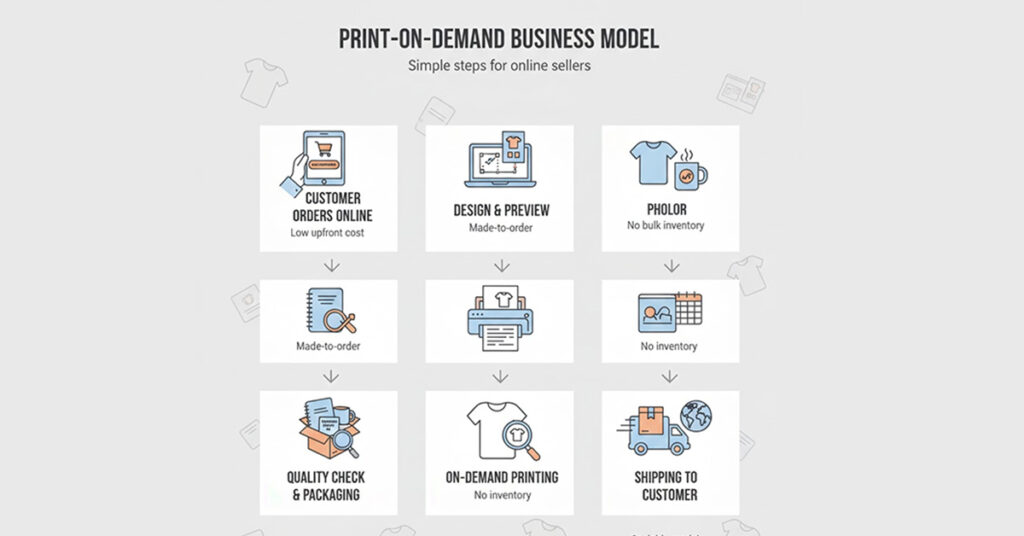
Print-on-Demand allows businesses to produce customized products only after an order is placed. Unlike traditional printing, POD eliminates the need for bulk inventory, upfront production costs, and storage space.
Common Print-on-demand products include:
- Apparel (T-shirts, hoodies, caps)
- Photo products (photobooks, calendars, prints)
- Personalized gifts (mugs, cushions, notebooks)
- Corporate and event merchandise
For first-time sellers, POD offers a low barrier to entry—but success depends on how well the model is executed.
Why the Print-on-Demand Market Is Growing So Fast
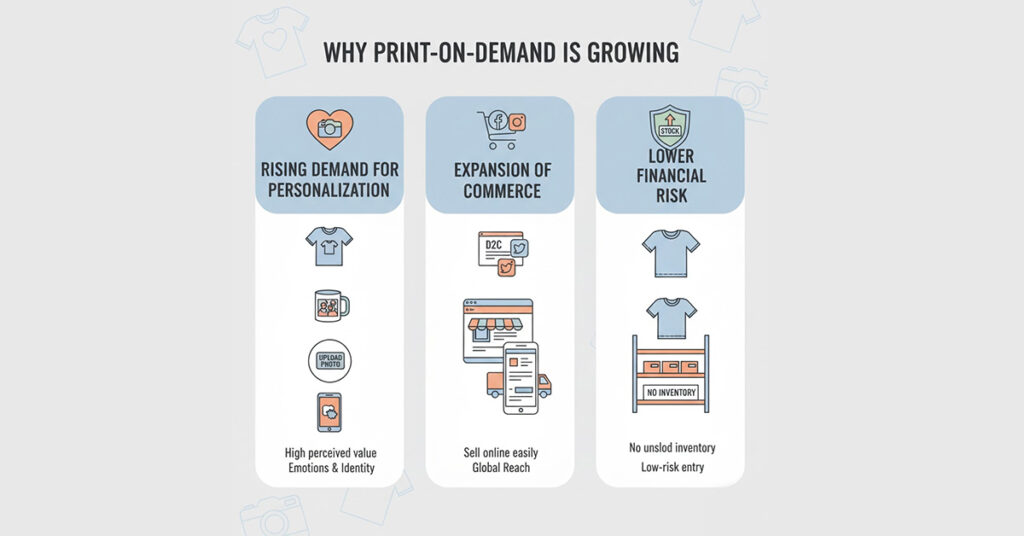
Several factors are fueling the rapid growth of POD globally:
1. Rising Demand for Personalization
Consumers increasingly prefer products that reflect personal identity, memories, or emotions. Personalized items often outperform generic merchandise in perceived value and gifting appeal.
2. Expansion of Online Commerce
Social media platforms, marketplaces, and D2C websites have made it easier for anyone to sell online—without needing physical retail infrastructure.
3. Lower Financial Risk
Print On Demand removes the risk of unsold inventory, making it ideal for:
- New entrepreneurs testing business ideas
- Print owners expanding services
- First-time POD sellers entering eCommerce
Despite these advantages, profitability requires planning, discipline, and the right tools.
The Key Drivers of Print-on-Demand Profitability
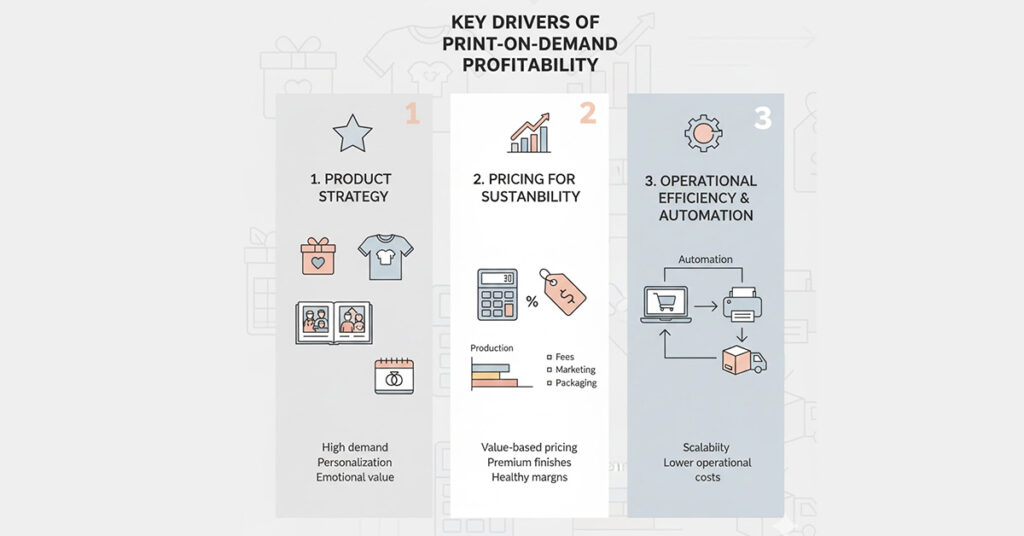
1. Product Strategy: Sell What Customers Actually Want
Many beginners make the mistake of launching too many products without validating demand. Profitable POD businesses focus on:
- High-demand product categories
- Strong personalization potential
- Emotional or functional value
2. Products linked to occasions, events, or identity—such as weddings, baby milestones, schools, or corporates—tend to generate higher margins and repeat orders.
3. Pricing for Sustainability, Not Just Sales
Pricing is one of the biggest challenges for new POD sellers. Competitive pricing alone does not guarantee profitability. A strong pricing strategy considers:
- Production and material costs
- Platform or marketplace fees
- Marketing and acquisition costs
- Packaging and fulfillment expenses
4. Successful POD brands price based on perceived value, not just cost. Customization, premium finishes, and professional presentation allow higher pricing without hurting demand.
5. Operational Efficiency and Automation
As order volumes grow, manual processes can quickly reduce margins. Automation plays a critical role in profitability.
Key areas where automation matters:
- Online design customization
- Order-to-production workflow
- Quality checks and approvals
- Shipping and delivery updates
6. Printers and entrepreneurs who adopt end-to-end POD fulfillment platforms are better positioned to scale without increasing operational costs.
What New Entrepreneurs Need to Know Before Starting POD
For first-time POD sellers, understanding the realities of the business is essential.
1. Low Entry Doesn’t Mean Easy Money
While POD requires less upfront investment, success still depends on:
- Market research
- Brand positioning
- Customer experience
- Consistent marketing effort
2. Treating Print-on-demand as a serious business—not a side experiment—improves long-term profitability.
3. Focus on a Clear Niche
Instead of targeting everyone, profitable POD businesses focus on specific audiences, such as:
- Schools and universities
- Corporates and HR teams
- Parents and families
- Creators and communities
4. Niche focus reduces competition, lowers marketing costs, and improves conversion rates.
What Print Owners Need to Succeed in Print On Demand
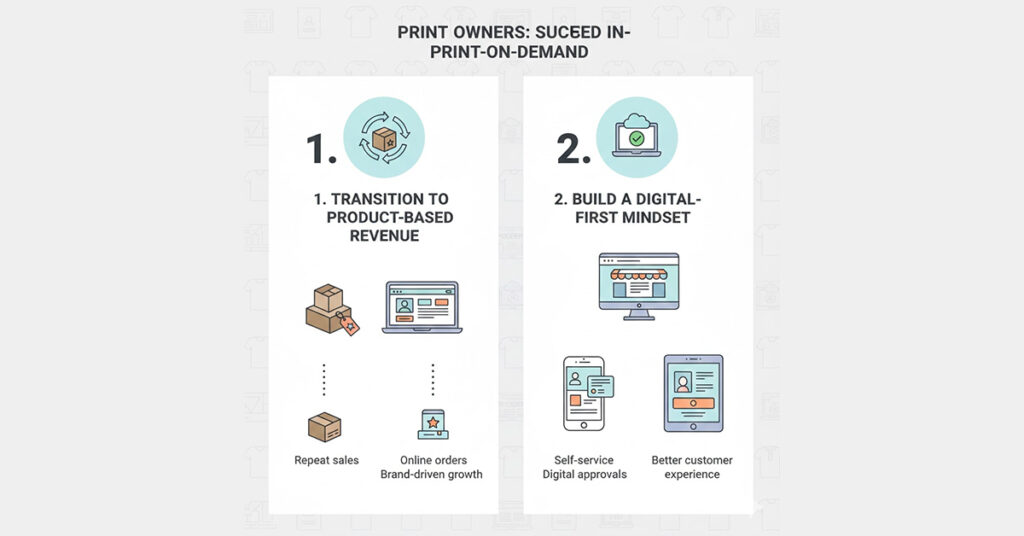
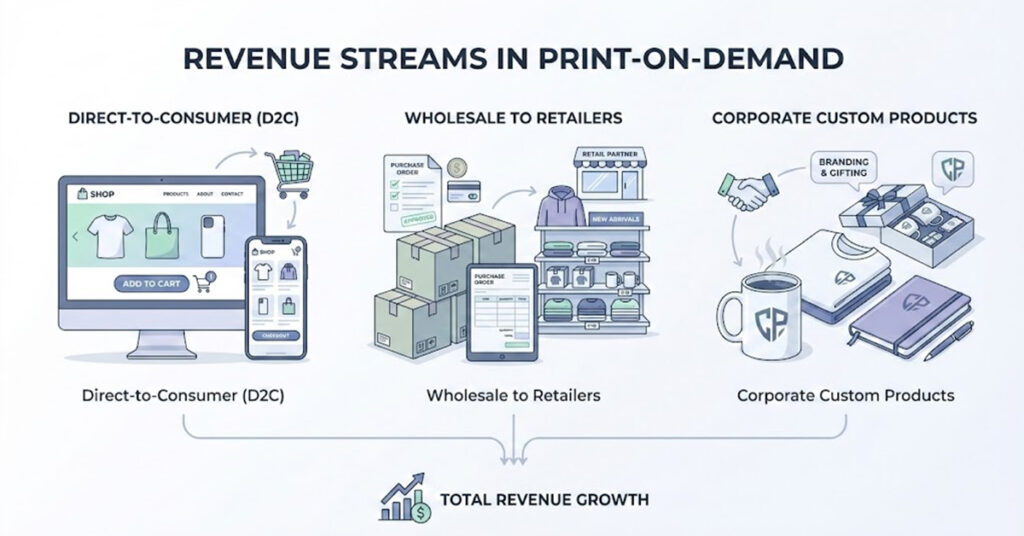
For traditional print owners, POD offers a powerful way to modernize and diversify revenue streams.
- Transition from Job Work to Product-Based Revenue
Unlike one-time print jobs, POD allows:
- Repeat sales
- Online order intake
- Brand-driven revenue growth
- This shift helps print businesses move from reactive work to scalable income.
- Build a Digital-First Mindset
Successful Print-on-demand printers invest in:
- Online storefronts
- Customer self-service tools
- Digital approvals and previews
- A smooth digital experience improves customer satisfaction and reduces manual intervention.
Marketing Strategies That Improve Print On Demand Profitability
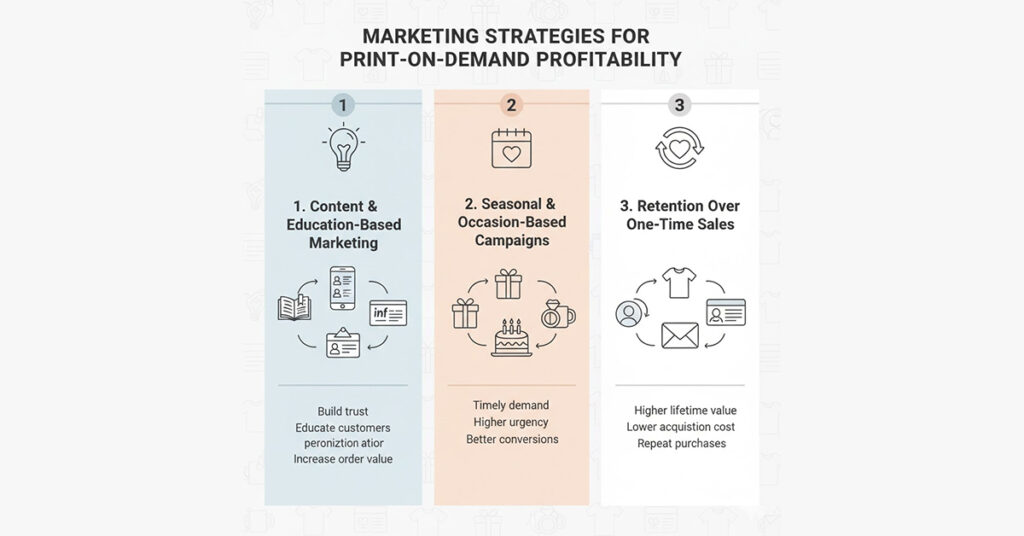
1. Content and Education-Based Marketing
Educating customers about product use cases, gifting ideas, and personalization options builds trust and increases order value.
2. Seasonal and Occasion-Based Campaigns
Aligning POD products with festivals, events, and milestones creates urgency and higher demand.
3. Retention Over One-Time Sales
Repeat customers are more profitable than new ones. Loyalty programmes, email marketing, and personalized recommendations improve lifetime value.
Common Mistakes That Limit POD Profitability
Even promising Print on demand businesses fail due to avoidable errors:
- Launching without validating demand
- Competing only on price
- Ignoring branding and packaging
- Poor delivery and fulfillment experience
- Lack of focus on customer support
Avoiding these mistakes significantly improves margins and customer trust.
The Role of Technology in Long-Term POD Success
Technology is no longer optional in Print-on-demand—it is a competitive advantage. Platforms that offer:
- Customization tools
- Automated workflows
- Scalable storefronts
- Analytics and reporting
Help printers and entrepreneurs focus on growth rather than operations.
Final Thoughts: Profitability Is a Strategy, Not a Feature
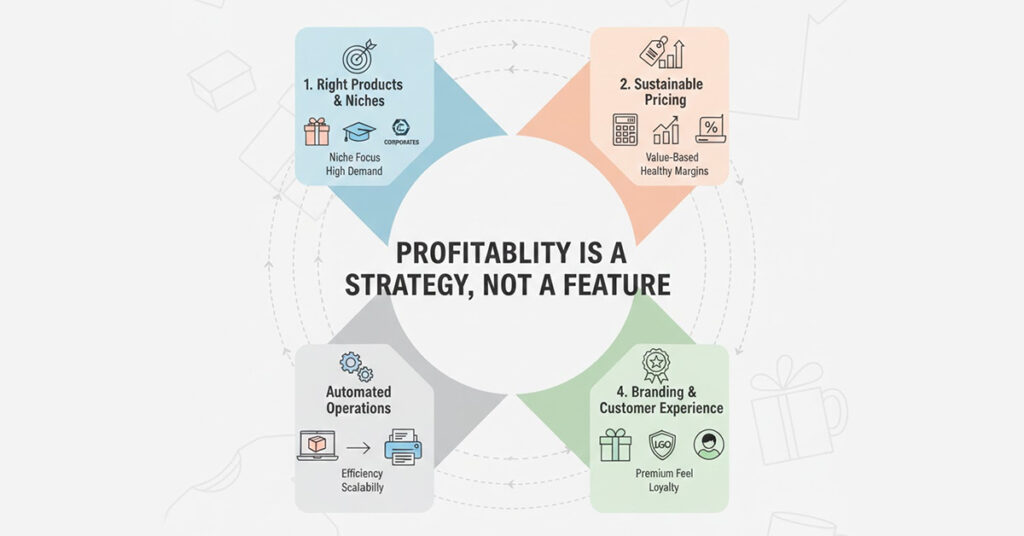
Print-on-Demand is one of the most accessible business models in today’s digital economy—but profitability requires intentional strategy.
For new entrepreneurs, print owners, and first-time POD sellers, success comes from:
- Choosing the right products and niches
- Pricing for long-term sustainability
- Automating operations
- Investing in branding and customer experience
With the right approach, Print On Demand can evolve from a simple printing service into a scalable, profitable business in this fast-growing market.
Start Your Print On Demand Journey Today
Ready to scale your Print-on-Demand business and boost profitability?
👉 Book a Demo with EzyCreate and automate your workflows for success.
Frequently Asked Questions (FAQs)
What is a good profit margin for print‑on‑demand?
A good profit margin for a print‑on‑demand business typically ranges from 20% to 40%, depending on product type, pricing strategy, and operational costs. Higher margins are possible with premium products and efficient automation.
Is print-on-demand still profitable in 2026?
Yes, print-on-demand is still profitable in 2026. The global print-on-demand market was valued at $4.9 billion in 2021 and is expected to grow at a CAGR of 26.1% from 2022 to 2030.
How does POD compare to traditional printing?
Unlike traditional printing, print-on-demand (POD) doesn’t require upfront inventory or bulk orders. POD businesses benefit from on-demand production, which reduces risk and provides better profit margins.
Is a 30% profit margin too much for POD?
No, a 30% profit margin is considered healthy for a POD business, especially after accounting for manufacturing, platform fees, marketing, and other expenses. With optimized workflows and niche products, this margin is achievable and sustainable.
Is print‑on‑demand legal in India?
Yes, print‑on‑demand is completely legal in India. There are no specific regulations restricting POD operations — you just need to follow standard business compliance rules (GST, online selling regulations, and applicable copyright laws for designs).
Is a 40% profit margin good for print‑on‑demand?
Yes, a 40% profit margin is excellent for a POD business. Higher margins usually come from effective pricing strategies, niche differentiation, and automation that reduces manual overhead.
Where is POD growing the fastest?
Print‑on‑Demand growth is especially strong in:
- North America
- Europe
- India & Southeast Asia
These regions have growing eCommerce adoption, print infrastructure, and consumer demand for personalized merchandise.
Which POD niches are seeing the most growth?
Top growing POD segments in 2026 include:
- Custom photobooks & yearbooks
- School merchandise
- Corporate gifts
- Creator merchandise (apparel, mugs, posters)
- Personal celebration products (weddings, anniversaries)