
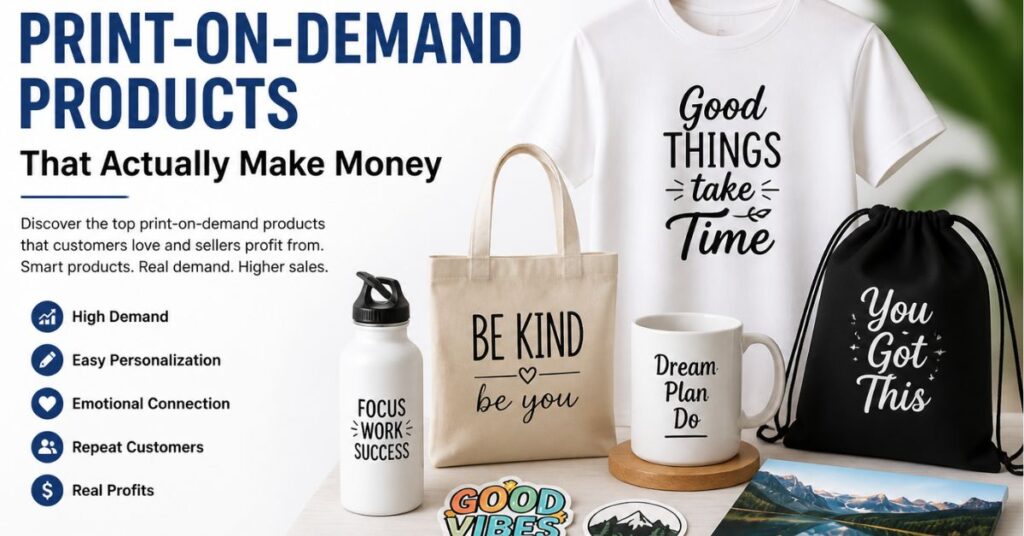
What are the best selling print on demand products?
The best selling print on demand products in 2026 are custom t-shirts, personalized coffee mugs, tote bags, canvas prints, wall photo frames, stickers, acrylic prints, coasters, magnets, kids’ rompers, and notebooks/planners. These products consistently outperform others because they combine everyday utility with emotional personalization — the two ingredients that remove buyer hesitation and drive faster purchase decisions.
Introduction
Every year, thousands of print-on-demand stores go live. They have good designs. They offer similar products. They even price competitively.
And yet, most of them struggle to generate consistent revenue.
The real difference isn’t what they sell. It’s how easily a customer can say “yes.” That gap — between a store that gets traffic and a store that actually converts — is what this guide closes.
Why These Are the Best Print on Demand Products to Sell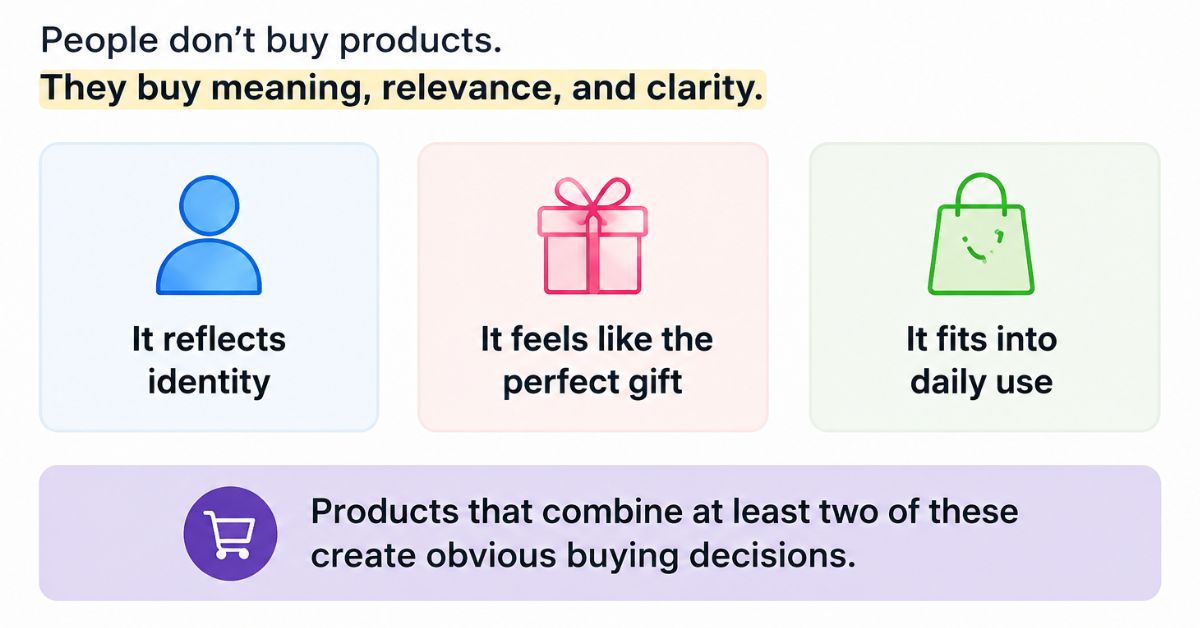
Not every Print On Demand product deserves space in your store. The best print on demand products usually have four qualities:
They solve an everyday need, are easy to personalise, are simple to ship, and have strong gift appeal. Products such as t-shirts, mugs, tote bags and wall art perform well because customers already understand them. They do not need much explanation before buying.
For beginners, familiar products are easier to test. For growing print businesses, higher-value products such as canvas prints, baby clothing and planners can help increase order value.
If you are new to the industry, you can also explore this guide on how to start a print on demand business to understand the basics of launching a POD store.
Best Print on Demand Products to Sell in 2026 With Real Conversion Logic
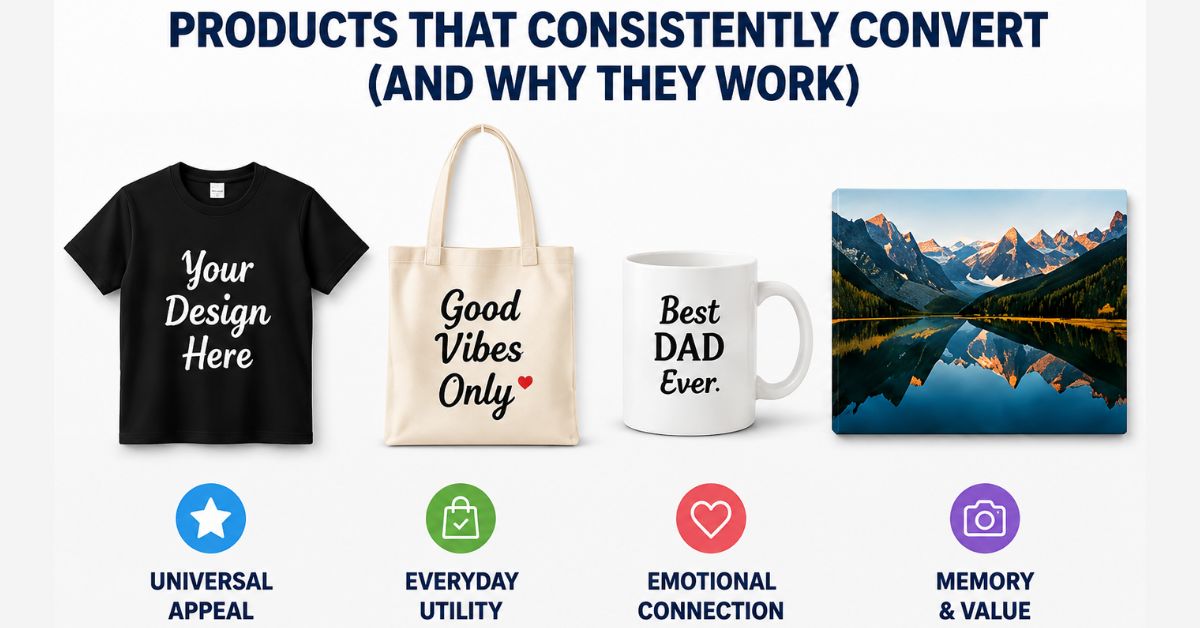
Most guides give you a list. This one gives you the why — what makes each product sell, what profit margin to expect, and which buyer emotion drives the purchase.
If you’ve been searching for what print on demand products sell best, these are backed by platform data, seller performance patterns, and buyer psychology — not just gut feel.
1. Custom T-Shirts — The Backbone of Every Best-Selling POD Store
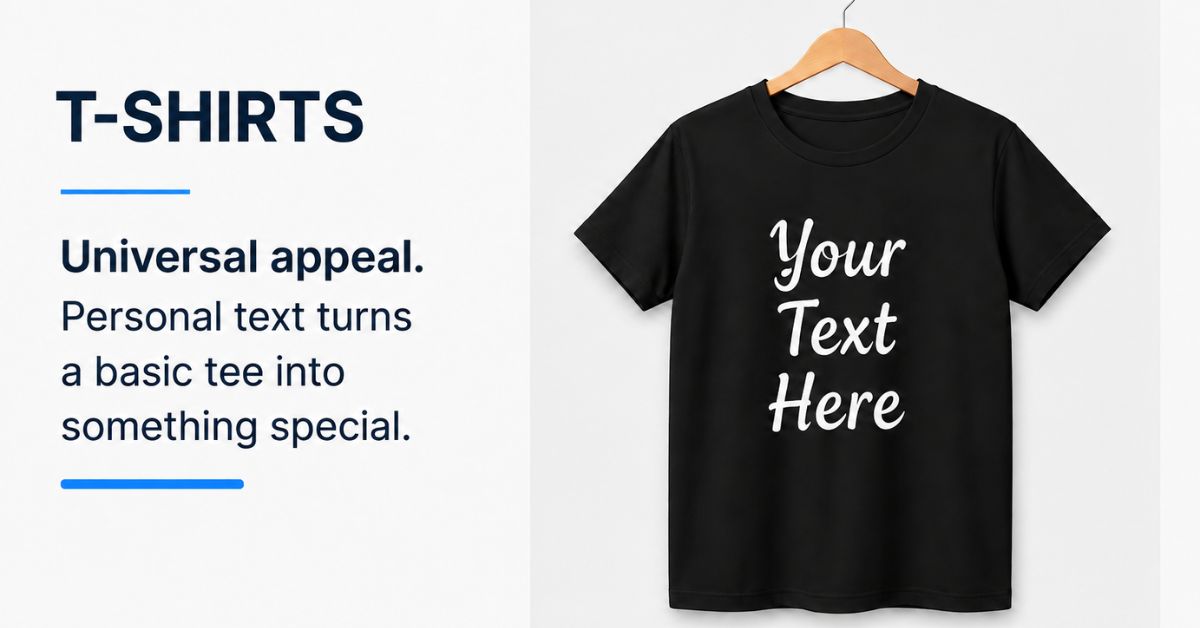
Profit Margin: 25–35% | Buyer Type: Identity + Gift
T-shirts are the universal entry point into Print On Demand. But what drives sales isn’t the fabric — it’s how personal it feels. A relatable line or a custom name shifts it from generic to “made for me.”
That emotional shift — from anonymous product to personal statement — is what drives repeat purchases and consistent demand year-round. T-shirts also carry the lowest barrier to first purchase, making them your best tool for acquiring new customers.
Why it works: Identity buy + evergreen demand + easiest personalization entry point.
2. Tote Bags & Drawstring Bags – Everyday Utility That Sells Itself
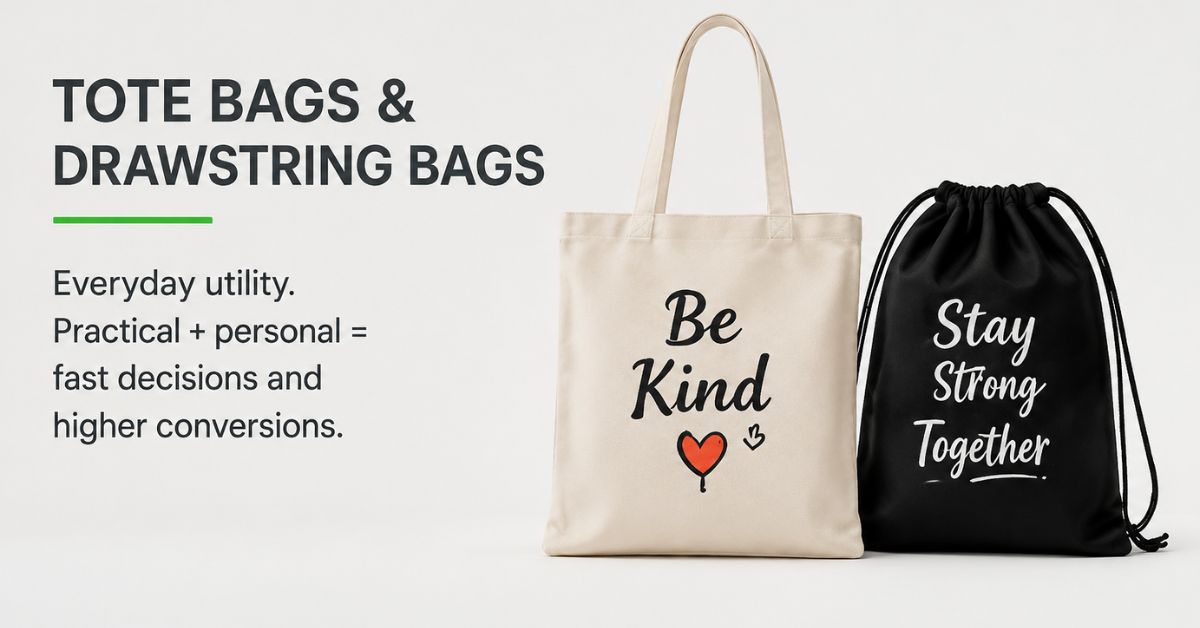
Profit Margin: 28–38% | Buyer Type: Self-Buy + Gift
Some products don’t need emotional storytelling. They sell because people already know they’ll use them. Bags fall into this category. Whether it’s for shopping, the office, or daily routines, the decision feels practical. Add a personalized touch and it becomes both useful and meaningful. Less thinking. Faster decisions. Higher conversions. Tote bags also have one of the lowest return rates in POD because buyers know exactly what they’re getting.
Why it works: Daily utility removes hesitation + low return rate + works year-round.
Tote bags combine practicality with personalisation, making them one of the best POD products for both fashion and gifting.
They are lightweight, easy to ship and suitable for:
- Eco-conscious brands
- Student communities
- Event merchandise
- Corporate gifting
- Fashion-led stores
Tote bags also provide a large printable area, allowing sellers to experiment with typography, artwork and illustrations.
According to Etsy Marketplace Insights, functional personalised products continue to perform well because buyers increasingly prefer useful gifts over decorative-only items.
3. Stickers – The First Step Into Your Brand
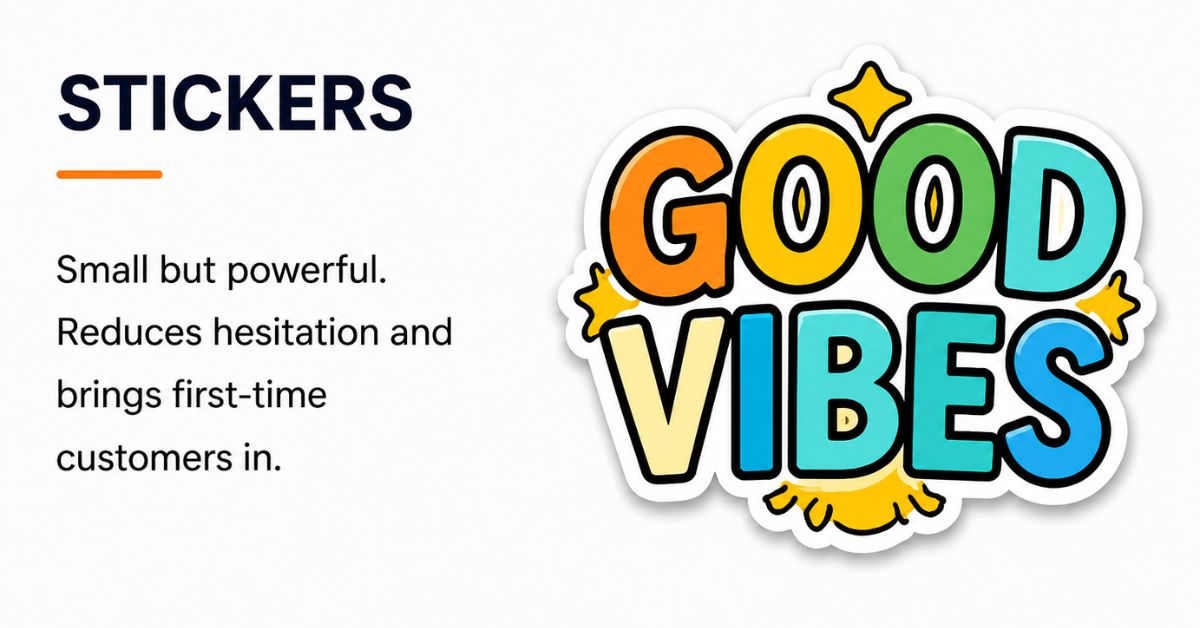
Profit Margin: 20–30% | Buyer Type: Impulse + First-Time Buyer
Stickers are often underestimated. Individually, they may seem small—but strategically, they are powerful. They reduce hesitation. They invite impulse purchases. And most importantly, they bring first-time customers into your ecosystem.
Once someone buys once, the cost of selling to them again drops dramatically. Stickers are your acquisition product — don’t judge them by their individual margin. Judge them by how many repeat buyers they create.
Why it works: Lowest barrier to first purchase + brand ecosystem entry + impulse buy trigger.
Stickers are one of the easiest print on demand products for beginners to test.
They are:
- Affordable
- Easy to customise
- Low-risk
- Lightweight
- Popular with younger audiences
Sticker packs work especially well for creators, fandoms, small businesses and school communities.
Because of their low price point, stickers can encourage repeat purchases and help increase basket size.
4. Personalized Coffee Mugs – Where Emotion Drives Sales
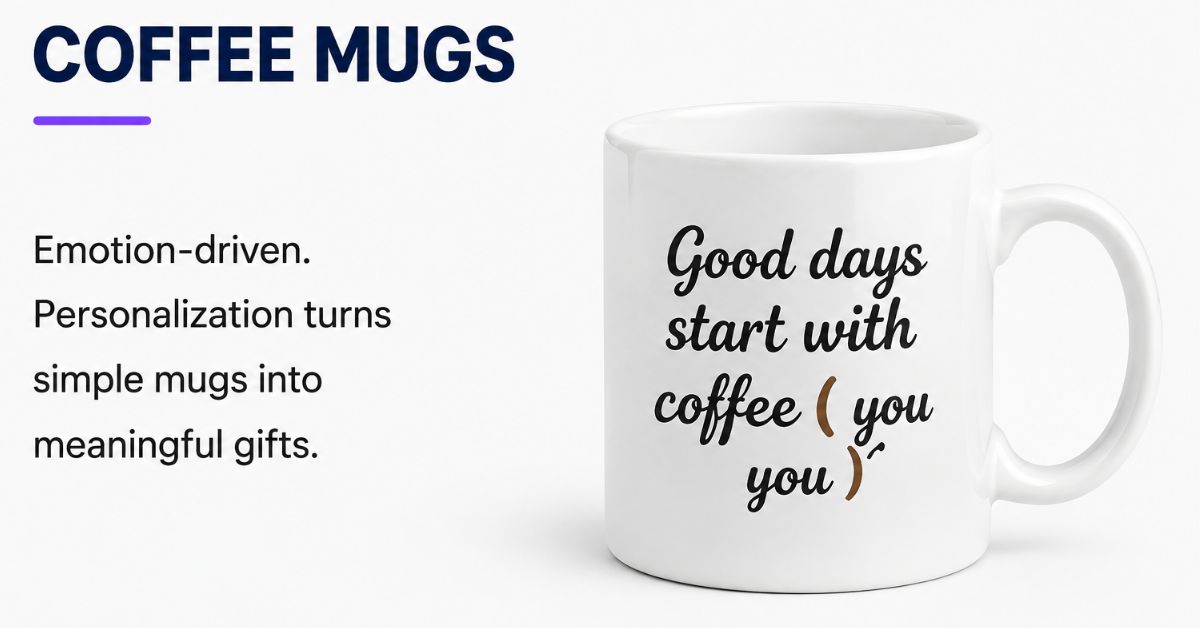
Profit Margin: 30–42% | Buyer Type: Gift + Occasion
Few products match the emotional flexibility of mugs. They work across birthdays, anniversaries, office gifting, and everyday moments. What makes them powerful is how easily they can be personalized — a name, a date, or a short message turns a simple object into something meaningful.
When customers can clearly see their personalization before buying, the decision becomes much easier. Mugs are also one of the most re-gifted product categories, which means your brand reaches new buyers with every purchase.
Why it works: High gift intent + strong personalization visual + seasonal demand spikes.
Personalised mugs are one of the most reliable gift-led print on demand products.
They perform strongly during:
- Birthdays
- Anniversaries
- Corporate gifting
- Teacher appreciation
- Seasonal events
- Family gifting
5. Canvas Prints – Where Memory Meets Value
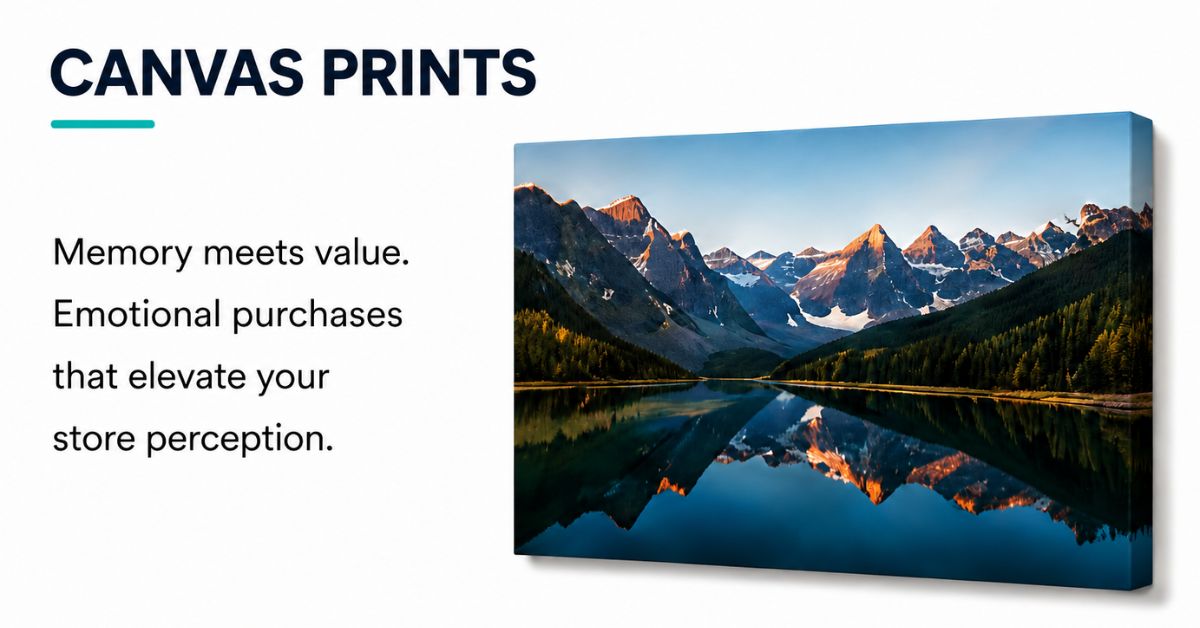
Profit Margin: 35–50% | Buyer Type: Memory + Milestone
Canvas prints elevate your entire store perception. These are not just products—they are emotional purchases. People use them to preserve memories, celebrate milestones, and decorate spaces with meaning. Customers don’t overthink here — they respond to what they feel.
This category also carries some of the highest average order values in POD. One canvas print purchase is worth 3–5 mug purchases in revenue terms, making it essential for any store that wants to improve margins without increasing traffic.
Why it works: High AOV + emotional purchase + low competition compared to apparel.
Canvas prints and wall art are premium-value POD products with strong emotional appeal.
These products are commonly used for:
- Family memories
- Wedding photos
- Travel décor
- Baby milestones
- Home decoration
- You can also analyse search seasonality for personalised home décor using Google Trends before planning campaigns.
6. Wall Photo Frames – Turning Moments Into Something Permanent 
Profit Margin: 30–40% | Buyer Type: Gift + Decor
Frames sit at the intersection of decor and emotion. They are chosen to hold something important — a memory, a moment, a story. Clarity drives conversion here: the simpler the customization experience, the faster the decision. Excellent for gifting seasons.
Frames perform exceptionally well during gifting seasons (Mother’s Day, Father’s Day, weddings, graduations) because they carry the perception of thoughtfulness — the buyer didn’t just order something generic, they created something lasting.
Why it works: Strong gifting occasion fit + decor intent + high perceived value.
7. Acrylic Prints – Premium Products That Drive Revenue
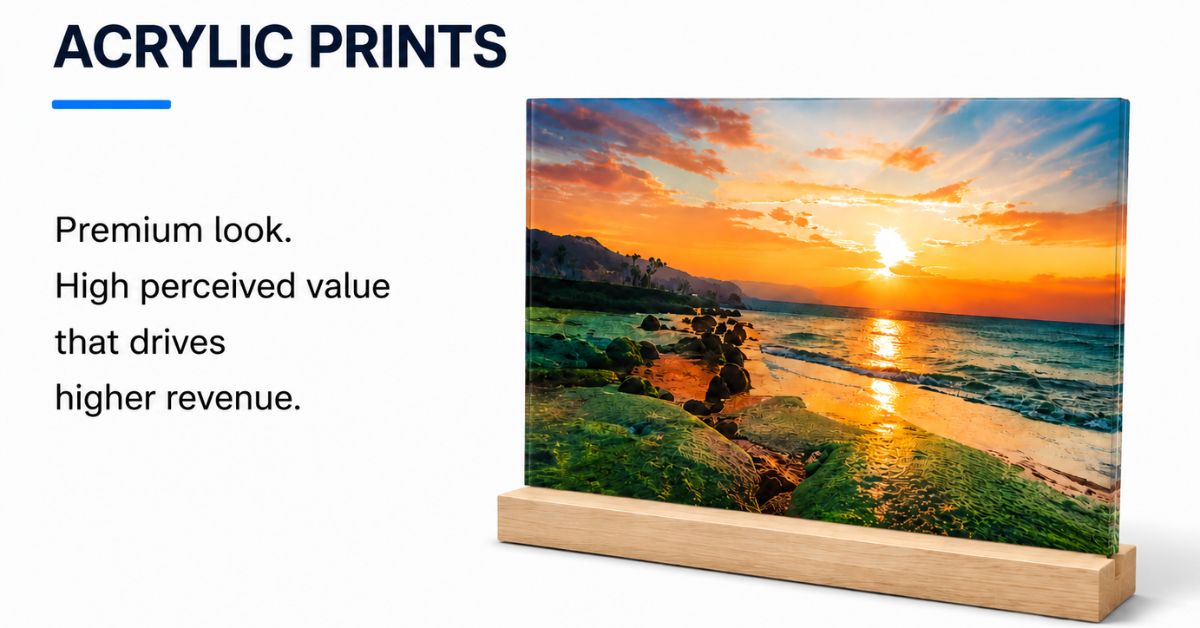
Profit Margin: 40–55% | Buyer Type: Quality-Conscious + Premium Gift
Acrylic prints attract buyers who care about finish, clarity, and presentation. They don’t generate high volume, but they significantly impact revenue per order. More importantly, they signal quality — and that perception elevates the trust level of your entire store.
When customers see premium options available, they trust even your lower-priced products more. Acrylic prints work as both standalone high-margin products and as anchors that lift the perceived quality of your whole catalog.
Why it works: Highest margin in POD + quality signal for full store + premium gift segment.
8. Coasters – Small Additions, Bigger Orders
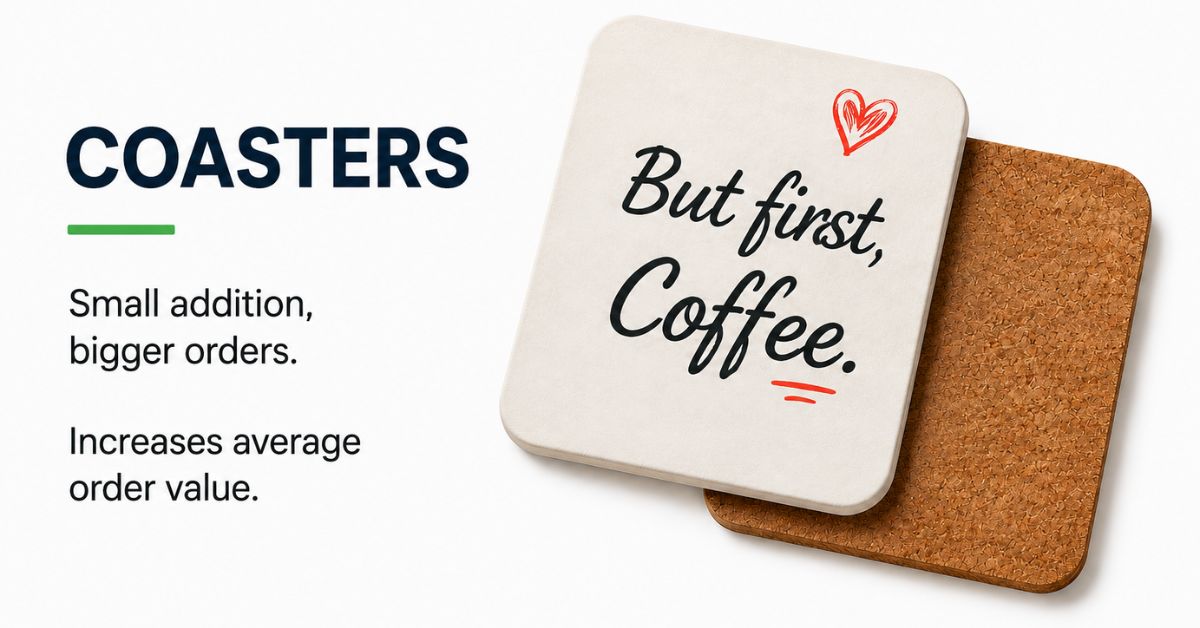
Profit Margin: 22–32% | Buyer Type: Bundle + Home Gifter
Coasters rarely bring customers in on their own. But they strengthen purchases once the buying journey has started. When positioned well as a bundle item or add-on, they increase average order value without requiring extra effort.
A customer buying a personalized mug set is an obvious coaster buyer. That bundle framing alone can increase order value by 20–30%.
Why it works: Natural bundle product + AOV booster + complements the home gifting category.
9. Magnets – Daily Visibility, Long-Term Impact
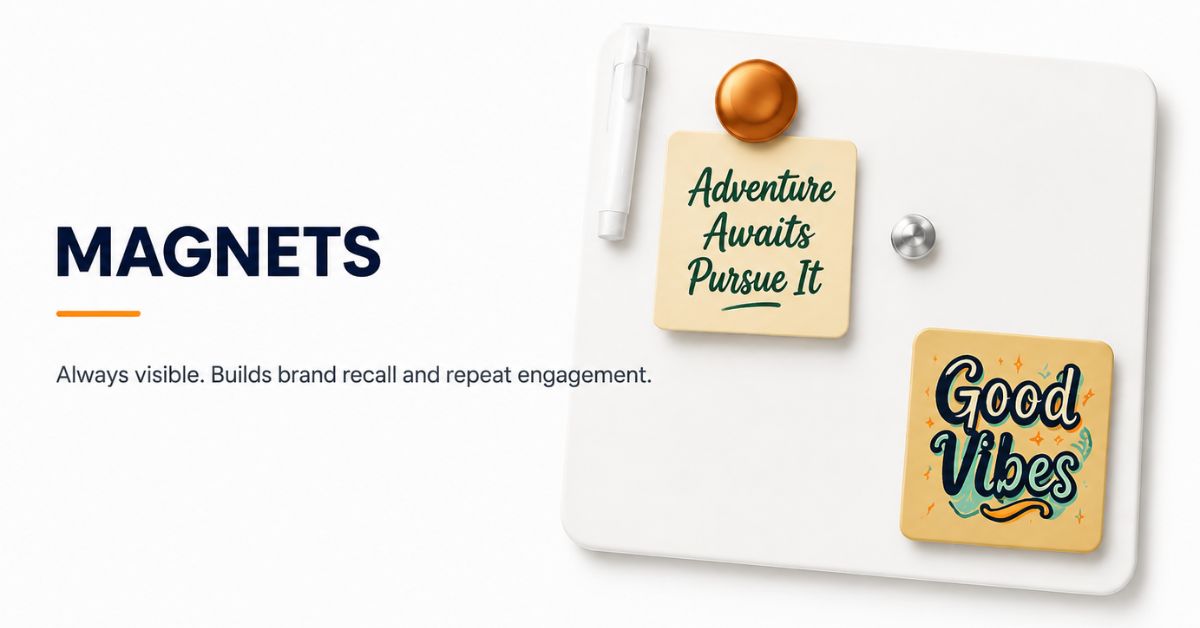
Profit Margin: 20–28% | Buyer Type: Upsell + Daily Use
Magnets stay visible every day — on fridges, desks, whiteboards. That constant presence builds brand recall and repeat engagement over time. They are also excellent upsell additions that increase cart value without the customer feeling sold to.
Position magnets as a “complete the set” add-on alongside mugs or coasters, and watch average order values climb without any additional traffic.
Why it works: Daily brand touchpoint + natural upsell item + pairs well with core products.
10. Kids Rompers – Emotion Over Logic
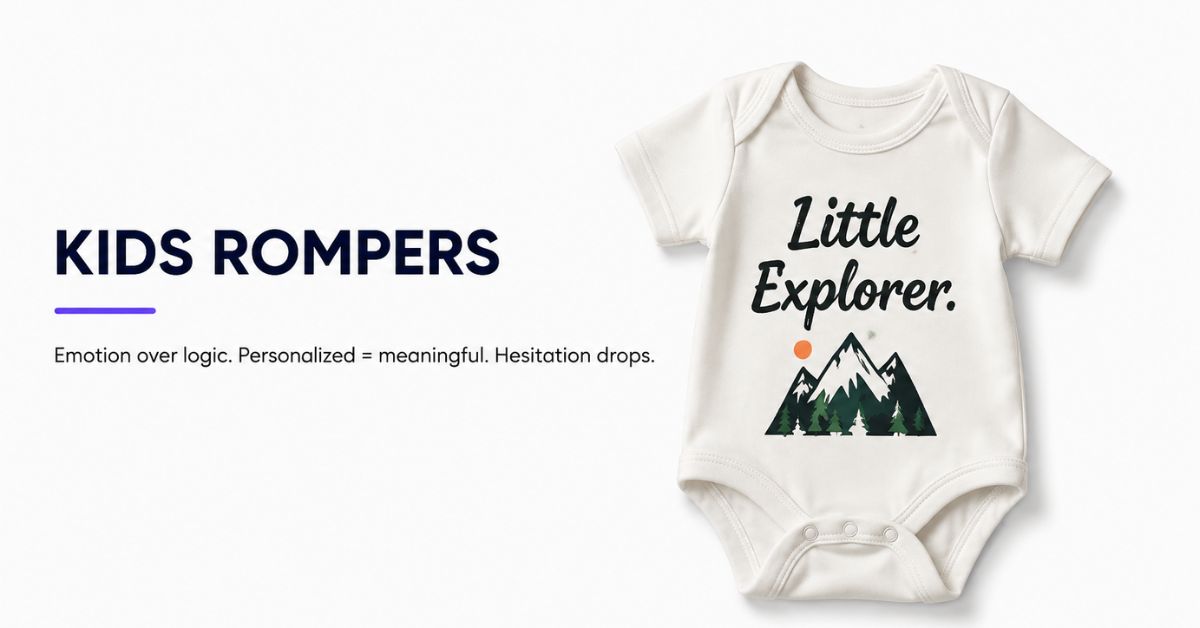
Profit Margin: 28–40% | Buyer Type: Parent Gift + Baby Shower
Parents don’t buy based on logic alone. They buy based on emotion. A personalized romper instantly feels meaningful. When something feels special to a parent, hesitation drops completely.
This category sees some of the highest conversion rates in gifting contexts, particularly around baby showers, first birthdays, and holiday seasons. The emotional intensity of the purchase is high, which means customers are pre-sold before they even land on your listing.
Why it works: Highest emotional purchase intensity + gift-first category + niche targeting potential.
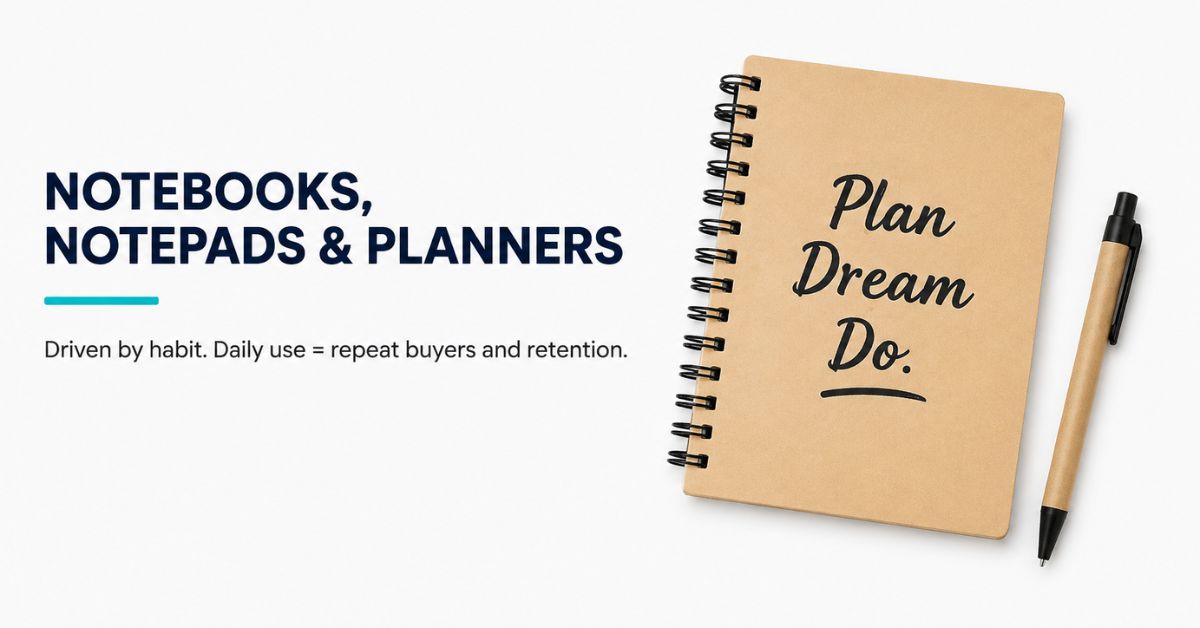
11. Notebooks, Notepads & Planners – Built for Customer Retention
Profit Margin: 25–38% | Buyer Type: Habit + B2B + Self-Buy
These products are driven by habit. People use them daily, run out, and return to buy again. Over time they create your most consistent customers — people who already trust your brand and don’t need to be convinced twice.
Notebooks also have strong B2B potential (branded corporate stationery) and work well as premium gifting items when paired with a personalized cover. High customer lifetime value makes this category more valuable than its per-unit margin suggests.
Why it works: Repeat purchase behavior + high LTV + B2B expansion opportunity.
Personalised notebooks and planners are useful products with repeat-purchase potential.
They work well for:
- Students
- Professionals
- Teachers
- Corporate gifting
- Productivity communities
Sellers can personalise these products using:
- Names
- Initials
- Quotes
- Company branding
- Event themes
Notebook products also work strongly during back-to-school and new-year periods.
How to Choose the Right Print on Demand Products for Your Store
The best product for your store depends on your audience, pricing, fulfilment setup and marketing goal.
If you are starting out, begin with simple products such as t-shirts, mugs, tote bags and stickers. These are easier to explain and test.
If your store already has traffic, add higher-value products such as wall art, canvas prints, baby clothing or planners. These can help increase average order value.
Before adding a new product, check:
- Can customers personalise it easily?
- Is the product simple to ship?
- Does it have gifting or repeat-purchase demand?
- Can you show a clear preview before checkout?
- Does the margin make sense after printing, packaging and delivery?
A profitable POD product is not only popular. It must also be practical to produce and easy for customers to buy.
If you are scaling operations, this article on print-on-demand automation explains how automation can reduce manual production effort.
Why Most POD Stores Don’t Convert Even With Good Products
Print-on-demand has made starting a business incredibly simple. No inventory. No production. No logistics.
But this ease has created a crowded space where customers are constantly comparing options. When someone lands on your store, they’re not evaluating quality first.
They’re subconsciously asking one thing:
“Is this worth buying right now?”
If your store doesn’t answer that instantly, they move on. This is why product selection alone doesn’t determine success — but product selection combined with the right buying experience does.
Here’s where most POD sellers actually lose customers — and it’s not at the beginning:
- Visualization gap — customers can’t clearly see the personalized final product before buying, creating doubt at the critical last moment
- Too many steps — each extra click, extra field, or extra page increases abandonment probability by 10–15%
- Delayed previews — manual customization processes that don’t update in real time break momentum exactly when purchase intent is highest
- Generic positioning — selling the same product with the same design angles as dozens of other stores, giving buyers no reason to choose you
What Actually Makes Customers Buy
People don’t buy products. They buy meaning, relevance, and clarity.
Every successful print-on-demand product connects with at least one strong purchase intent:
- It reflects identity
- It feels like the perfect gift
- It fits into daily use
But the best print on demand products to sell? They combine at least two of these. That’s when a product stops feeling optional and starts feeling like an obvious decision — and that’s the exact mechanism behind every high-converting POD listing you’ll ever study.
Why You’re Losing Orders Without Realizing It
Here’s what most sellers don’t notice: they’re not losing customers at the beginning. They’re losing them at the last step.
Not because the product is bad. But because the buying experience creates friction.
Customers drop off when they cannot clearly visualize what they’re going to receive. If they have to imagine the final product, uncertainty creeps in — and hesitation follows.
Manual processes make things worse. Delays in previews, confirmations, or responses slow down decision-making at the exact moment customers are ready to buy. And then comes the biggest issue — too many steps.
Every extra click, every extra field, every extra moment of confusion increases the chance of abandonment. By the time a customer reaches checkout, they should feel confident — not confused. If that clarity is missing, most of them leave silently.
The Real Conversion Shift — EzyCreate Solutions
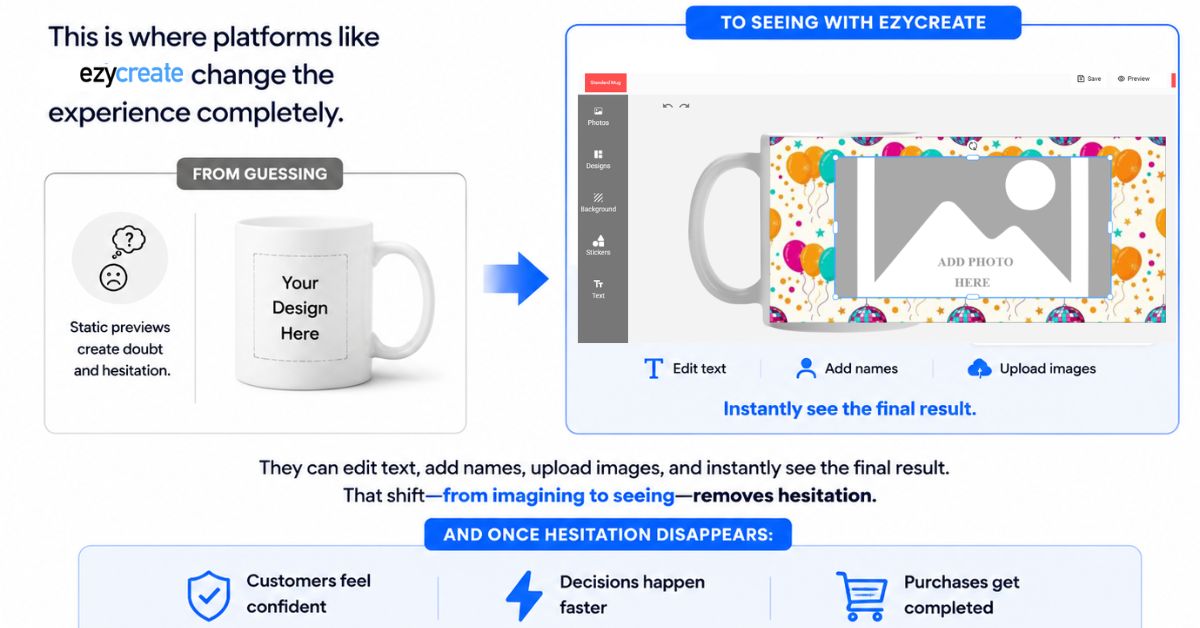
This is where platforms like EzyCreate redefine the buying experience. Instead of static previews, customers can actively personalize their product in real time. They can edit text, add names, upload images, and instantly see the final result.
That transition — from guessing to clearly seeing — eliminates doubt.
When doubt is removed :
- Customers feel confident
- They decide quicker
- Purchases get completed
Behind the scenes, everything runs seamlessly — printing, processing, and shipping are fully automated, with no need for inventory or manual handling. This means you can focus on the products and designs that sell, not on operations.
Building a POD Store That Actually Makes Money
A successful store doesn’t depend on one product. It works as a system. Understanding which of the best selling print on demand products to place in each tier is what separates scaling stores from stagnant ones.
Entry Tier — Stickers, Magnets, Coasters — Get Customers In The Door
Low price point, low hesitation. These are your gateway products — they build first-purchase trust and bring new customers into your ecosystem without requiring a big commitment from the buyer.
Core Tier — T-Shirts, Mugs, Tote Bags, Notebooks — Generate Consistent Revenue
These are your volume drivers. The best print on demand products to sell for consistent monthly income — high demand, high personalization potential, and proven repeat purchase behavior across all seasons.
Premium Tier — Canvas Prints, Acrylic Prints, Wall Frames — Improve Margins
Lower volume but significantly higher revenue per order. These also elevate the perceived quality of your entire store — customers who see premium products available trust the whole catalog more.
When these layers work together, growth becomes stable and scalable. You’re not dependent on one viral product — you’re building compounding revenue across all three tiers.
The Real Growth Lever
Most sellers focus on getting more traffic.
But traffic alone doesn’t fix conversion.
A smaller audience with a better buying experience will always outperform a larger audience with confusion.
When your store feels clear, personal, and easy to trust—
👉 customers don’t delay. They buy
FAQs About Best Selling Print on Demand Products
1. What are the best selling print on demand products in 2026?
The best selling print on demand products are usually custom t-shirts, personalised mugs, tote bags, stickers and wall art. These product types work because they are easy to personalise, familiar to buyers and suitable for both self-purchase and gifting.
2. What print on demand products sell best for beginners?
For beginners, t-shirts, mugs, tote bags and stickers are usually the safest options. They are straightforward to merchandise, have broad buyer familiarity and are easier to test across multiple niches without overcomplicating fulfilment.
3. What are the best print on demand products to sell for gifts?
Coffee mugs, canvas prints, wall photo frames, and personalized kids rompers are the strongest gift-driven products. They combine emotional relevance (a name, date, or memory) with a physical product that feels premium. Gifting intent is one of the strongest purchase motivators in POD — products that serve this intent see 30–50% higher conversion rates during seasonal peaks.
4. What profit margin should I aim for in POD?
A healthy margin typically ranges between 20–40%, depending on your product mix and pricing strategy. Premium personalized items like acrylic prints and canvas prints can reach 40–55% when sold at the right price point. Entry products like stickers and magnets sit at 20–30% — lower individually, but valuable for customer acquisition and upsell sequences.
5. Why is personalization important when selling POD products?
Personalization creates emotional connection. When customers see their own name, date, or design on a product, it immediately feels unique and more valuable than anything they could find in a regular store. More importantly, a personalized product eliminates comparison shopping — there’s no identical alternative anywhere else, which makes the buying decision faster and more confident.
5. How can I improve conversion rates in my POD store?
Focus on three things: real-time product previews (so customers see exactly what they’ll receive before buying), fewer checkout steps, and clear personalization options up front. The biggest conversion killer in POD is the “imagination gap” — when customers have to guess what the final product will look like. Platforms like EzyCreate solve this with live customization previews that update instantly as buyers personalize.
6. Do I need a large catalog to succeed with print on demand?
No. A focused set of the best selling print on demand products — organized across entry, core, and premium tiers — will always outperform a large, unfocused catalog. Quality beats quantity in POD: 10 well-positioned products with strong personalization options convert better than 100 generic listings. Start narrow, test what works, then expand strategically.
7. How does EzyCreate help improve sales?
EzyCreate enables real-time product customization with live previews — customers can edit text, add names, upload images, and see the final result instantly before purchasing. This removes the single biggest friction point in POD buying: uncertainty about the final product. The result is faster decisions, fewer abandoned carts, and higher conversion rates. All fulfillment — printing, processing, shipping — is fully automated on the backend.
8. Are t-shirts still one of the best print on demand products to sell?
Yes. T-shirts remain one of the strongest POD categories because they have year-round demand, broad audience reach and lots of niche potential. They also work well as both entry products and repeat-purchase products.
9. How do I choose profitable print on demand products?
Choose products by balancing demand, personalisation potential, breakage risk, fulfilment cost and perceived value. A profitable product is not only popular; it must also be practical to produce, price and ship consistently.
10. How can I improve conversion rates for print on demand products?
Improve conversion by reducing friction. Show clear product previews, explain customisation options early, keep the page scannable, use stronger trust signals, and make the most giftable or easiest-to-understand products visible above the fold.
The Bottom Line
You don’t need a massive catalog. You don’t need complex strategies.
What you need is clarity about which best selling print on demand products to focus on — and a buying experience that removes every reason to hesitate.
Products that connect.
Personalization that feels natural.
An experience that removes doubt.
Because when a customer feels:“This is made for me” — they don’t overthink. They convert.
Final Thoughts
The best selling print on demand products for 2026 are simple, useful and easy to personalise. Start with proven products like t-shirts, mugs, tote bags, stickers and wall art. Then expand into higher-value or niche products once you understand your audience and margins.
With the right product mix and a smooth personalisation experience, print businesses can increase conversions, reduce manual work and grow more confidently.
Ready to offer personalised products online? Explore EzyCreate’s custom product design software and start building a smoother print-on-demand buying experience.
Explore EzyCreate pricing to find the right plan for your business.
Need help choosing the right solution for your POD business? Contact Us